
Outer Shells, Thermal Liners & Custom-Built Features: Buying Guide for Nordic Winter Workwear Jacket

Executive Summary
Procurement specialists serving Nordic industrial, field service, forestry and mining customers face unique hurdles when selecting winter workwear jacket. Beyond basic wind-proof and water-proof performance, local end-users prioritize long-term field durability, ergonomic movement for all-day shifts, and market-specific regulatory requirements. Many winter workwear supplier focus purely on lab-sheet specs while overlooking real-world site pain points: restricted mobility, premature fabric wear, poor fit for layered base clothing, and non-compliant hi-vis marking.
This buying guide moves past standard product spec lists. It explores material trade-offs between different shell constructions, performance-graded thermal liner selections tailored to Nordic shift patterns, value-focused custom modifications, and practical supplier qualification tips to help buyers pick a reliable winter workwear supplier for their winter workwear jacket projects.
1. Real-World Site Demands for Nordic Winter Workwear Jacket
Nordic work sites are not only defined by extreme low temperatures. Workers commonly wear thick base layers underneath their winter workwear jacket, perform repeated bending, lifting, climbing, and work long shifts in mixed conditions: bright snow glare, damp sleet, ice abrasion from snow removal gear, and limited daylight hours.
Generic winter jacket designs often fall short in these scenarios. Shell cut can be too slim to accommodate thermal base layers; liner warmth is mismatched to shift length; fabric cannot resist scuffs from metal equipment and icy surfaces. A competent winter workwear supplier will start design review from on-site worker feedback rather than only material datasheets.
2. Outer Shell Material Trade-offs & Field-Focused Selection
When you collaborate with a winter workwear supplier for winter workwear jacket orders, do not only check hydrostatic head and breathability figures. You also need to weigh fabric weight, surface treatment durability, repellent longevity after repeated washing, and cut compatibility for under-layers.
|
Material Evaluation Item |
Preferred Target |
Practical FieldSide Impact |
|---|---|---|
|
Fabric Base Weigh |
220-280 g/m² woven polyester |
Too-light fabric tears easily; over-heavy fabric adds fatigue for all-day wearing |
|
Durable Water Repellent (DWR) |
≥5 industrial wash cycles remain beading performance |
DWR fade leads surface wet-out even if membrane still holds waterproof pressure |
|
Shell Pattern & Cut |
Relaxed functional fit, extended arm length |
Reserve internal room for thermal base layers; prevent sleeve retraction when raising arms |
|
Cold-resistant surface coating |
No surface chalking after repeated freeze-thaw cycles |
Avoid surface coating peeling caused by repeated freeze and melt on snow sites |
|
Reinforcement Zone Fabric |
High-denier fabric on elbow, shoulder and hip |
These zones bear most friction during crawling, kneeling and carrying work |
Important note: Many winter workwear supplier quote high hydrostatic head test results on new fabric. Ask to verify DWR retention performance after washing aging test, as this determines real world performance of your winter workwear jacket.
3. Thermal Liner Performance Grading Based On Nordic Working Shifts
Instead of only comparing GSM numbers, evaluate thermal liner for winter workwear jacket by work-shift type, activity level and indoor-outdoor rotation frequency. Consult your winter workwear supplier to build tiered liner portfolios for different staff groups.
|
Liner Category |
Thermal Feature |
Shift-Type Matching |
Hidden Drawbacks To Watch |
|---|---|---|---|
|
High-Air-Permeability Polar Fleece |
Fast moisture wicking, moderate warmth |
Dynamic shift: forestry, road maintenance, frequent movement |
Poor wind blocking performance. Not suitable for openair stationary standing in heavy wind |
|
Rip-stop Padded Liner |
Stable thermal output even under light dampness |
Long outdoor static shift: utility patrol, roadside winter monitoring |
Bulky when over-spec; reduces arm mobility if thickness is over-configured |
|
3-Layer Softshell Liner |
Stretch mobility, compact volume |
Office-field mixed staff: foremen, project managers |
Limited standalone warmth; cannot serve as primary thermal layer in below-25℃ open-air work |
Critical detail: Pay attention to liner edge binding. Cheap liner will have raw, fraying edges. Quality winter workwear supplier applies heavy-duty binding tape along all liner seams, extending the service life of winter workwear jacket liner under repeated take-on and take-off.
4. Value-Driven Custom Modifications for Nordic Market
Customization for winter workwear jacket is not limited to logo embroidery and colour changes. A capable winter workwear supplier can implement many site-oriented small custom tweaks which greatly improve end-user satisfaction, without drastically lifting unit cost.
4.1 Site-Driven Functional Customization
- Snow-gaiter inner cuffs: Built-in soft snow stopper inside sleeve opening, stops snow particles drifting into sleeves when workers handle snow piles.
- Multi-position tool pocket layout: Custom-place radio holder, pen slots, glove hanging loops on chest and sleeve, matching Nordic field-worker tool-carrying habits.
- Snow-shedding hood brim shaping: Structured hood brim prevents snow from piling on hood and dropping down onto user’s neck.
4.2 Nordic-specific Safety Customization
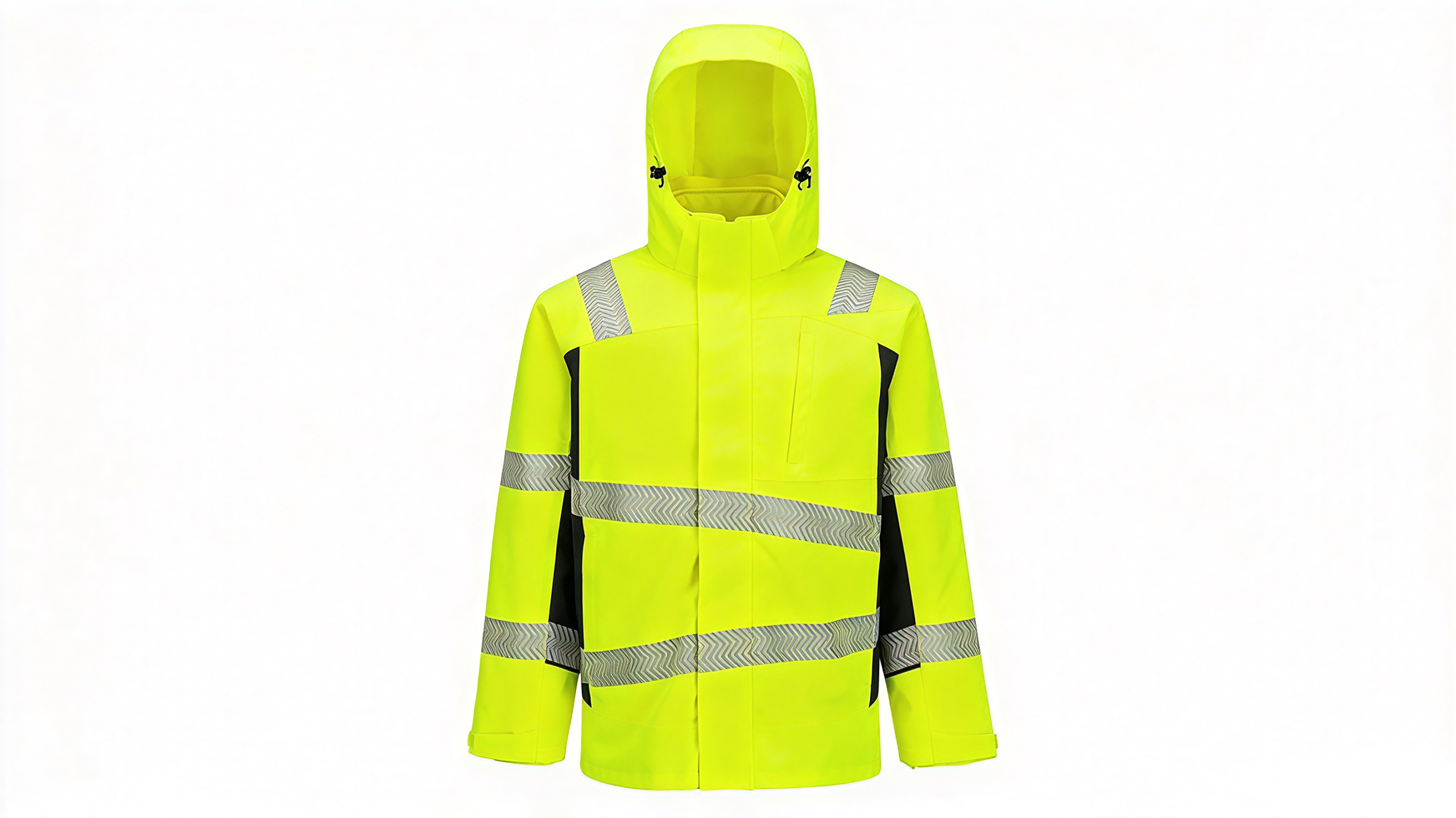
Apart from standard EN ISO 20471 reflective tape, winter workwear supplier can adjust reflective tape placement for snow-field visibility: add lower-body reflective segments, optimize tape angle for low-sun winter light conditions. For forest and mining segments, low-noise non-scratch reflective material options are available to avoid scratching equipment surfaces.
4.3 Practical Branding Customization
Besides printer’s zipper embroidery access, winter workwear supplier offers alternative marking solutions for winter workwear jacket: heat-transfer reflective logos, durable silicone printing. These choices suit different order volume and wear-and-tear scenarios without damaging shell waterproof integrity.
OEM / ODM note: Good winter workwear supplier supports tiered custom service: minor low-cost modification for stock base patterns, plus full custom development for completely new winter workwear jacket patterns for private-label lines.
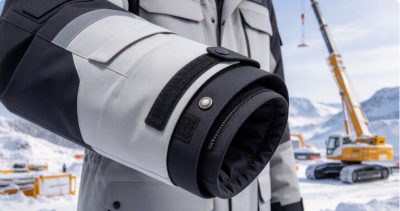
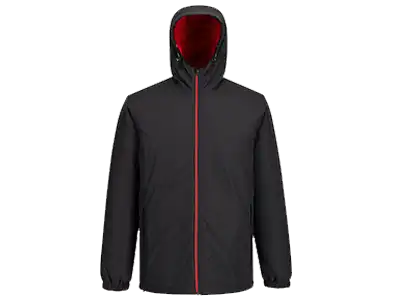
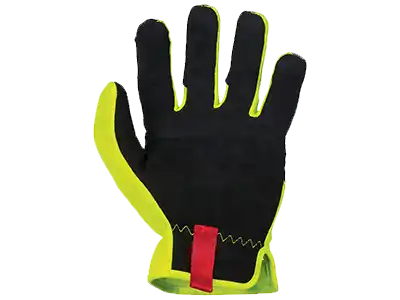
Nordic Winter Work Jacket – Snow-blocking Cuff & Fabric Reinforcement Details
5. Supplier Qualification Checklist (Beyond Lab Test Reports)
When selecting your winter workwear supplier for winter workwear jacket production, in addition to checking certification documents, focus on these practical capability indicators:
- Real Nordic reference cases: Can the winter workwear supplier provide finished product references previously delivered to Nordic winter workwear clients?
- Freeze-thaw simulation ageing capability: Does factory run in-house ageing test simulating Nordic snow-melt freeze cycles for shell and liner components?
- Sample iteration capacity: How many rounds of physical prototype adjustment for winter workwear jacket can be supported before mass production?
- After-sample technical tracking: Does engineering team follow-up on fabric batch consistency for bulk production, not only rely on initial lab sample data?
- Spare-part service: Can separate replacement liner be supplied for winter workwear jacket after delivery, to extend total garment service life for buyers?
Head over to our Cooperation page to review our factory credentials and manufacturing competence
Frequently Asked Questions (FAQ)
1. For Nordic winter workwear jacket, is heavier fabric always better for harsh sites?
Not necessarily. Over-heavy shell material increases physical fatigue during long shifts. A trustworthy winter workwear supplier balances fabric weight, denier reinforcement placement and DWR durability. Targeted high-denier reinforcement on high friction zones delivers better overall performance than heavy weight fabric across the whole jacket.
2. Our staff mix dynamic heavy labour and stationary guard duty, how should we configure liner solutions?
Talk with your winter workwear supplier to adopt mixed liner portfolios. Assign fleece liner for high-movement crews, padded liner for stationary outdoor posts. Avoid applying one single liner specification for all personnel within your winter workwear jacket order.
3. What custom work brings highest return without pushing up cost significantly for winter workwear jacket projects?
Prioritize snow inner cuffs, tool-carrying pocket re-layout, optimized reflective tape position and silicone brand marking. Experienced winter workwear supplier can implement these adjustments based on existing base patterns with limited extra cost, yet greatly improve end-user satisfaction.
4.Can I purchase replacement inner liners separately for 3‑in‑1 jackets?
Yes. Replacement inner liners are available for separate order. Please order according to original batch specifications to ensure full compatibility of zippers and fastener anchor points between liner and outer shell for smooth assembly and removal.
5.Can reflective markings for Nordic orders meet EN ISO 20471 certification requirements?
Yes. We supply EN ISO 20471‑grade reflective materials with complete third‑party test reports. Layout adjustment of reflective tapes is also available for snow‑field working environments.
Closing
Sourcing competitive winter workwear jacket for Nordic markets goes far beyond comparing waterproof and thermal parameters on spec sheets. It calls for evaluating shell material real world trade offs, grading liner performance matching actual worker shift patterns, picking high value site oriented custom tweaks, and vetting practical manufacturing capabilities of your winter workwear supplier.
Working with a winter workwear supplier who understands Nordic on site conditions will help you avoid common specification traps, cut unnecessary custom expense, and deliver winter workwear jacket that performs reliably on Nordic field sites.
Contact us to discuss your Nordic winter workwear jacket project.