
3‑in‑1 Work Jackets for Cold and Wet Markets: A Buyer’s Guide to Shells, Liners, and Customization

Executive Summary
For buyers sourcing workwear for cold and wet conditions across Nordic, Eastern European, Russia-CIS markets, selecting protective apparel that balances windproof and waterproof performance alongside high-performance insulation for outdoor construction, utility and logistics teams presents key procurement challenges. Sourcing reference for Russia-CIS industrial workwear can be found on our Eastern Europe & Russia-CIS market page.
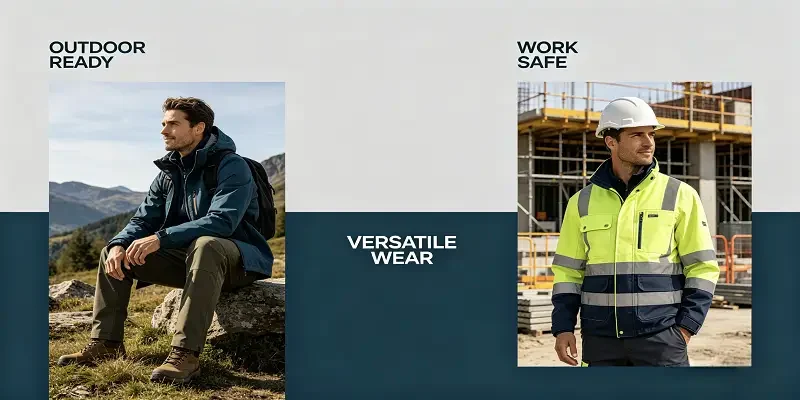
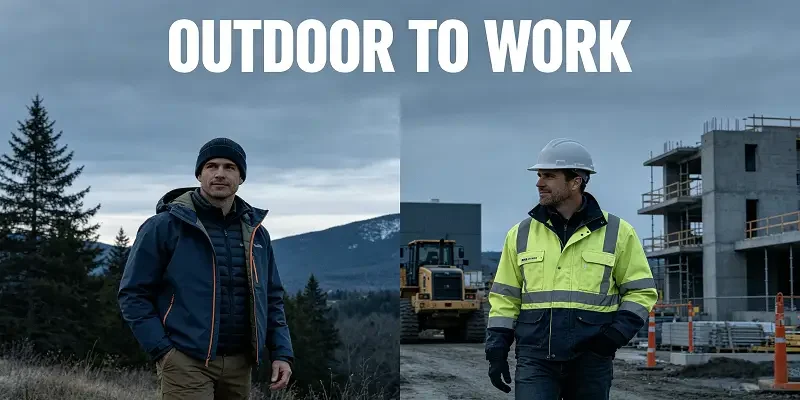
Standard heavy winter coats often lack sufficient adaptability for shifting severe cold and physically-intensive manual labour. A modular 3-in-1 jacket can offer flexible layering across changing weather conditions. This technical guide breaks down the essential criteria for selecting 3-in-1 work jackets, from outer shell specifications and liner selection to cold-climate customization and supplier vetting. Note that the suitability of a 3-in-1 garment depends on the complete wearing system, work intensity and performance validation results; the modular construction alone cannot guarantee adequate protection for extreme-cold environments.
1. Why Consider 3-in-1 Work Jackets for Cold and Wet Conditions
During winter-spring in Nordic and Eastern Europe, certain sites see bitter cold, strong winds, freezing rain or slush. Verify thermal performance via ISO 15831 full-ensemble testing instead of judging by fabric alone.
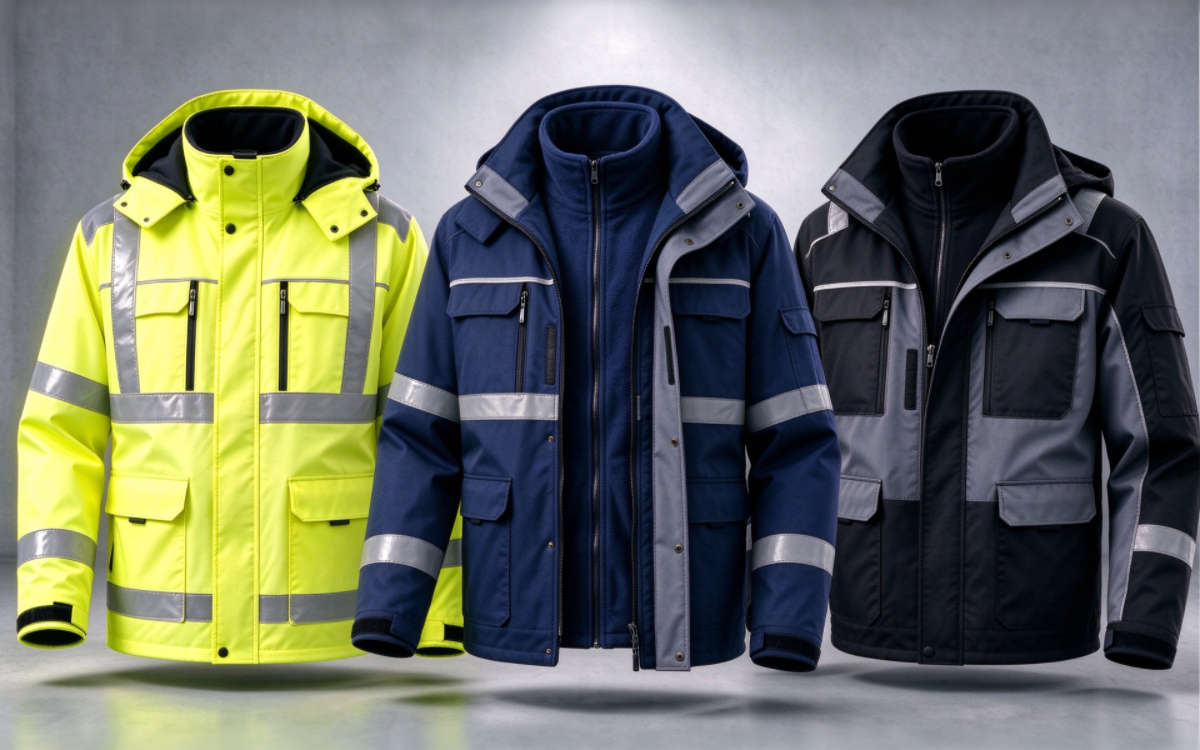
Modular 3‑in‑1 Construction
- Standalone Shell: Windproof and waterproof, designed for autumn/spring rain or high‑exertion tasks.
- Standalone Liner: Lightweight and thermal, suitable for indoor warehousing or dry, low‑wind transitional weather.
- C. Combined System (Shell + Liner): Adds insulation while the shell provides weather protection. Seals at collars, cuffs, zippers and hoods still require full-garment sample evaluation for water ingress and heat loss risks.
Total Cost Advantage
- Modular layering may reduce the number of separate garments required, depending on local weather and work schedules. Buyers should compare purchase, laundering, repair and liner-replacement costs against actual-use frequency.
2. Outer Shell Technical Specifications & Selection
The outer shell is the first line of defense against severe weather. When sourcing for Eastern European and Nordic markets, verify three primary performance parameters:
|
Technical Parameter |
Buyer specification or verification point |
Functional Role & Purpose |
|---|---|---|
|
Hydrostatic Head |
Project-specific hydrostatic-head target; verify the tested EN 343 classification where required. |
Resists heavy snowstorms and prolonged wet snow pressure |
|
Breathability |
MVTR and RET are non-interchangeable. Specify test method, layers, conditions (RET: m²·Pa/W). Assess full-system breathability with liner fitted. |
Evaporates sweat during active work to prevent internal moisture buildup and cold shock |
|
Seam Construction |
Fully Taped Seams |
Helps seal needle holes; verify seam waterproofness and durability after the agreed cleaning cycles. |
|
Abrasion Resistance |
300D/600D Oxford Polyester or Cordura Reinforcements |
Withstands heavy friction and tearing on industrial job sites |
3. Thermal Inner Liner Options & Selection Matrix
Different job sites require different levels of thermal retention, breathability, and mobility. Select inner liner materials based on targeted field operations:
Polar Fleece Liner (280–320 GSM)
- Key Benefits: Lightweight, highly breathable, and quick‑drying.
- Best‑Fit Applications: High‑intensity manual labor, warehouse logistics, and frequent indoor‑outdoor shifts.
Padded / Puffer Liner (120–200 GSM Insulation)
- Key Benefits: Insulated liners can add warmth; wind resistance and durability depend on the face fabric and construction.
- Best‑Fit Applications: Lower-activity outdoor tasks requiring additional insulation, subject to clothing-system testing.
Potential development option, subject to compatibility and sampling
- Key Benefits: Ergonomic stretch, water resistance, sleek fit, and modern corporate appearance.
- Best‑Fit Applications: Mid‑to‑high‑end corporate uniforms, management staff, and outdoor site supervisors.
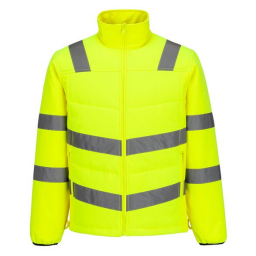
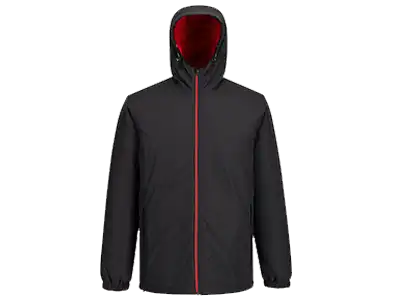
LEAPY Style 6697 3-in-1 Winter Work Jacket Liner
4. Cold‑Climate Customization & Engineering Details
To meet the demanding requirements of cold‑climate buyers, experienced manufacturers incorporate specialized functional features:
Cold‑Weather Engineering
- Fleece-Lined High Collar & Detachable Hood: Removable or packable hood and fleece-lined collar are configurable design options. Verify glove-friendly zipper operation, helmet compatibility and layering mobility via sample evaluation.
- Storm Flaps & Windproof Cuffs: Double storm flaps with hook‑and‑loop closures and internal elastic storm cuffs with thumbholes.
High‑Visibility & Safety Compliance (Hi‑Vis)
- Hi-vis designs should be assessed against the applicable garment standard and required class.
Branding & Decoration Access
A. Decoration access can simplify logo application, but the decoration method and location must be validated to preserve waterproof performance.
For custom OEM/ODM development or technical sampling support, send your target market, working conditions, required certifications, order quantity and logo artwork to discuss sampling.
5. Technical Procurement Checklist
Before confirming technical specifications or placing orders with winter-workwear suppliers, check the following items:
[1] Third‑Party Lab Testing: Are official test reports available for ISO 811 (Waterproofness), ISO 11092 (Breathability), and EN 343 compliance?
[2] Low-Temperature Flexibility: Verify full assembly at -30℃ with defined test protocol.
[3] Liner Attachment Integrity: Is the liner secured via dual‑fastening systems (zipper + snap/loop locks at collar and cuffs)?
[4] Wash Retention Performance: Does seam tape hold without peeling after 5 to 10 industrial wash cycles?
Review our cooperation process for sample evaluation and trial orders.
Frequently Asked Questions (FAQ)
1.Will the waterproof membrane of a 3in1 jacket turn brittle and crack at subzero temperature of 30℃?
Low-temperature performance depends on the coating or membrane formulation and garment construction. Request testing at the intended use temperature.
2.How should buyers balance strong thermal insulation and breathability for active work?
- Specify and verify breathability for the intended activity level, and assess ventilation and liner options during sampling.
3.Why do 3‑in‑1 jackets require dedicated anchor points at cuffs and collar?
Anchor points at cuffs and collar can help reduce liner movement. Evaluate zipper specs, collar/cuff fasteners, comfort and durability through sample testing.
4.How to embroider brand logos without damaging waterproof seam tapes?
An internal decoration-access zipper simplifies logo application, but embroidery may still puncture bonded waterproof membrane. Confirm placement, sealing method and waterproof performance after decoration.
5. Can we get full OEM / ODM customization for our private-label brand?
Customization options can be discussed during product development and sampling. Available items include fabric colours, reflective‑tape layout, pocket configuration, liner options and corporate branding.
Achieving the right balance between certified weather protection, thermal versatility and cost‑effectiveness relies on specification review and sampling validation. Discuss the target specification, available test documentation and any additional testing required before production.
Request a 3-in-1 Work Jacket Sample and Specification Review. Share your target market, working conditions, required certifications, order quantity and logo artwork. Learn More About LEAPY on About us.