
Hi-Vis Workwear Sourcing Guide: Fabric, Reflective Details, Fit & Custom Options

Executive Summary
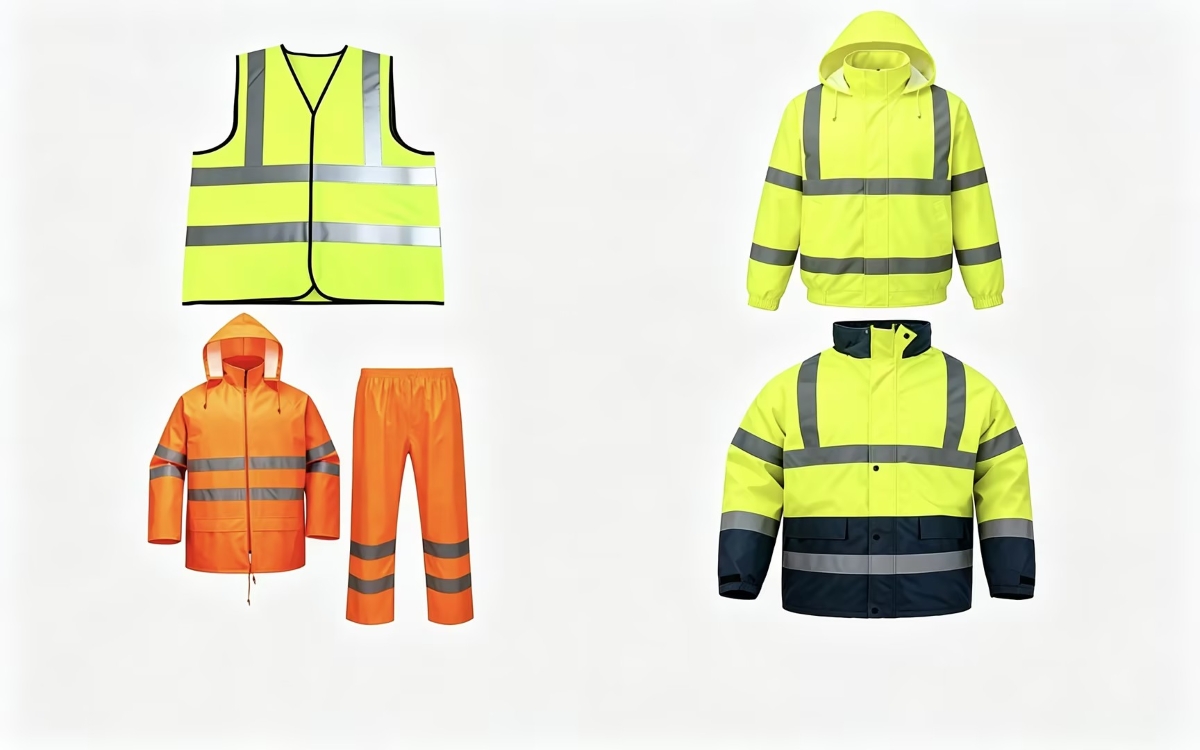
For workwear distributors, personal protective equipment (PPE) suppliers, and corporate procurement managers across North America and Europe, sourcing high-visibility (Hi-Vis) protective apparel represents a balance between regulatory compliance, wearer comfort, and long-term product durability. High-visibility garments serve as a vital line of defense for industrial workers, traffic operators, and construction crews operating in high-risk, low-light environments.
Navigating the technical landscape of protective apparel requires a clear understanding of international safety benchmarks, specialized textile engineering, retroreflective tape technologies, and scalable OEM manufacturing workflows. This technical sourcing guide provides a structured framework to evaluate fluorescent base fabrics, retroreflective trims, ergonomic pattern constructions, and private-label customization options for bulk procurement.
1. High-Visibility Fabrics: Standards and Material Selection
The shell fabric is the primary structural foundation and safety engine of any high-visibility garment. Its primary purpose is to maintain intense color luminescence during daylight hours, ensuring the wearer remains immediately distinguishable against hazardous industrial backgrounds. Sourcing managers typically evaluate two main fabric categories based on the intended occupational environment:
- 100% Polyester High-Visibility Weaves: Polyester synthetic fibers are widely used for high-visibility outerwear, vests, and protective shells. While synthetic fibers absorb specialized fluorescent dyes deeply, color fastness to light and laundering varies by dyeing process and test grade. Buyers should request supplier test reports for colorfastness and fluorescent color coordinates.
- Cotton-Polyester Blends (e.g., 80/20 or 65/35): For indoor warehouse logistics, hot-climate road construction, or physically intensive manual tasks, pure synthetics can sometimes restrict breathability. Cotton-rich or cotton-blend fabrics combine moisture management with structural durability; specific blend ratios should be verified against exact SKU fabric specifications.
Key Regulatory Compliance Standards: High-visibility apparel specified for international distribution must comply with rigid regional safety frameworks:
- EN ISO 20471 (European Union): Mandates minimum surface area measurements for fluorescent background materials and retroreflective bands across Class 1, Class 2, and Class 3 garments. Note that Class 3 compliance is not inherently met by adding torso, arm, and leg coverage alone; it depends on certified total retroreflective and background material surface area, garment layout, and style-specific lab testing.
- ANSI/ISEA 107 (North America): Defines Performance Classes based on occupational risk exposure. Type R specifies Off-Road/Roadway, Type O specifies Non-Roadway, and Type P specifies Public Safety. Procurement managers should verify exact style-level SKU classification rather than assuming broad compliance.
2. Reflective Tape Specifications and Application Methods
Retroreflective tape is the critical functional element that safeguards workers in darkness by reflecting light from vehicle headlights directly back to the driver's line of vision. When evaluating reflective trims during the sourcing process, procurement specialists must review three core technical dimensions:
- Micro-Prismatic vs. Glass Bead Technology: Glass bead reflective tape utilizes embedded microscopic glass spheres to bounce light back, offering a cost-effective solution for standard safety vests. Micro-prismatic reflective tape employs precision-engineered polymer prisms for specific applications. Retroreflectivity performance depends on base materials, entrance angles, observation angles, and wet-weather performance; buyers should evaluate initial $\text{cd/lx/m}^2$ values, wet retroreflectivity ratings, and post-wash lab reports.
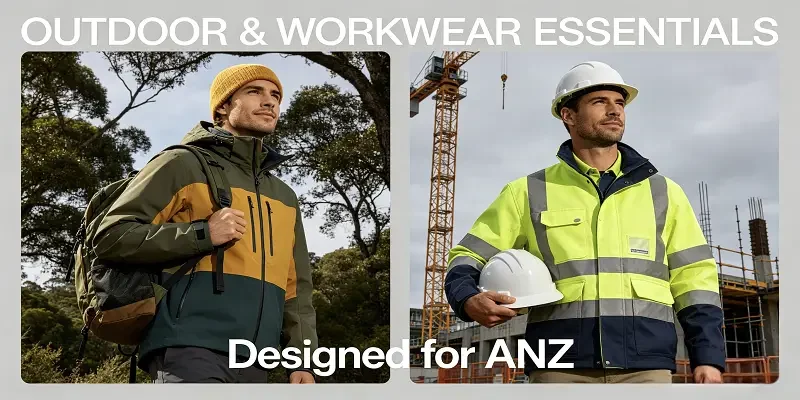
- Sew-On vs. Heat-Transfer Application: Traditional sew-on reflective bands provide high mechanical attachment strength for heavy canvas jackets and work trousers. Heat-transfer segmented reflective tapes offer flexible stretch, reduced stiffness, and enhanced breathability for softshell jackets and activewear.
- Industrial Washing Durability: Retroreflective tape service life varies based on base backing, adhesive/stitching, temperature, and laundering conditions. Rather than assuming broad wash-count guarantees, buyers should verify maintenance requirements, care instructions, and wash-cycle test certifications for each trim configuration.
3. Hi-Vis Workwear Technical Comparison
The following configuration examples serve as indicative starting points for RFQ discussions. Specific fabric weight, retroreflective trim, compliance class, and application suitability are subject to style-level verification and buyer customization:
|
Workwear Category |
Recommended Fabric Spec |
Reflective Trim Configuration |
Compliance Standards |
Typical Occupational Applications |
|---|---|---|---|---|
|
Lightweight Safety Vests & Polos |
120–160 GSM 100% Polyester Mesh or Bird-Eye Knit |
5 cm Glass Bead Sew-On or Segmented Heat-Transfer |
EN ISO 20471 Class 1/2 or ANSI Class 2 (Subject to style-specific surface area testing) |
Indoor warehousing, fulfillment centers, summer traffic control |
|
All-Weather Softshell & Windproof Jackets |
280–320 GSM Polyester Bonded with TPU Membrane |
5 cm Micro-Prismatic or High-Grade Heat-Transfer |
EN ISO 20471 Class 3 or ANSI Type R Class 3 (Indicative configuration for RFQ; subject to final sample audit) |
Highway maintenance, railway engineering, municipal utility repairs |
|
3-in-1 Insulated Winter Work Jackets |
300D Oxford Polyester Shell + PU Coating + Detachable Fleece Liner |
5 cm Sew-On Retroreflective Bands (Body & Sleeves) |
EN ISO 20471 Class 3 (Evaluated separately for high-visibility, rain protection, and thermal protection standards; subject to full lab test audit) |
Cold-climate infrastructure construction, maritime ports, nighttime outdoor operations |
4. Ergonomic Fit, Durability, and Functional Tailoring
High-performance protective wear must facilitate unhindered physical movement while ensuring that fluorescent materials remain in correct anatomical alignment. Modern workwear pattern-making incorporates specialized functional adjustments:
- Articulated Sleeves and Gusseted Underarms: Pre-curved sleeve constructions prevent garment wrist cuffs from pulling back when workers reach forward. Underarm gussets prevent the bottom hem from lifting upward during overhead movement.
- Extended Drop-Tail Back Hem: Provides extra coverage over the lower back and waist when crouching or sitting.
- Optional Functional Features: Heavy-duty radio loops, transparent ID card holders, storm flaps, and mic tabs can be integrated as optional OEM add-ons upon technical review, ensuring background and reflective surface area compliance is maintained.
5. Private-Label OEM & Custom Options
LEAPY® partners with global workwear brands, safety distributors, and enterprise buyers to develop customized, branded safety apparel programs:
- Brand Identity Integration: Flame-retardant heat transfer logos, high-density embroidered crests, rubber badges, and customized neck tape are available on selected styles. Note that adding non-compliant logos or trims must be evaluated to ensure total certified background/reflective surface area is not compromised.
- Modular Color-Blocking & Trims: Custom contrast color blocking (such as dark lower panels to conceal dirt in high-wear areas), color-matched zipper pullers, and specialized pocket configurations.
- Compliance Documentation & Private Labeling: Private-label neck labels, care labels, and hangtags can display official test certification details applicable to the specific SKU and scope. Lab reports and certificate scope must match the exact garment construction.
- Supply Chain & Production Infrastructure: To review facility qualifications, manufacturing capabilities, and quality assurance protocols, visit the LEAPY About Us Page. To understand the step-by-step OEM workflow from tech-pack evaluation to final bulk shipment, explore the LEAPY Cooperation Process Guide.
Technical Quality Control Checklist for Buyers
Prior to approving bulk production, procurement managers should verify the following quality indicators:
- Third-Party Test Certificates: Require valid laboratory test reports (e.g., from SGS, Intertek, or TÜV) for the exact garment model, style configuration, background fabric, and reflective trim combination verifying EN ISO 20471 or ANSI/ISEA 107 compliance.
- Colorfastness & Dimensional Stability: Verify colorfastness to light (ISO 105-B02) and post-wash dimensional stability.
- Sample Approval Window: Sample timing and prototype development are quoted case-by-case based on style complexity, fabric availability, trim verification, and revision rounds.
Buyer Checklist: Request Your Custom Hi-Vis Quotation
- Planning an OEM high-visibility apparel program or expanding your catalog for upcoming procurement cycles? Submit your tech packs and requirements through our B2B team:
- Target Market & Certification Scope: State whether your destination market requires European EN ISO 20471 or North American ANSI/ISEA 107 compliance.
- Order Volume, Fabric & Commercial Terms: MOQ, fabric inventory, color options, and delivery lead times are evaluated case-by-case based on specific style requirements. Mixed-series orders can be discussed during initial inquiry.
- Customization Specifications: Share vector artwork for corporate logos, radio loop positions, or custom pocket layouts.
Submit a Sourcing Inquiry on theLEAPY Contact Page