
Inside Our Apparel Factory: How 5S Management Ensures Reliable OEM Workwear Production

Introduction
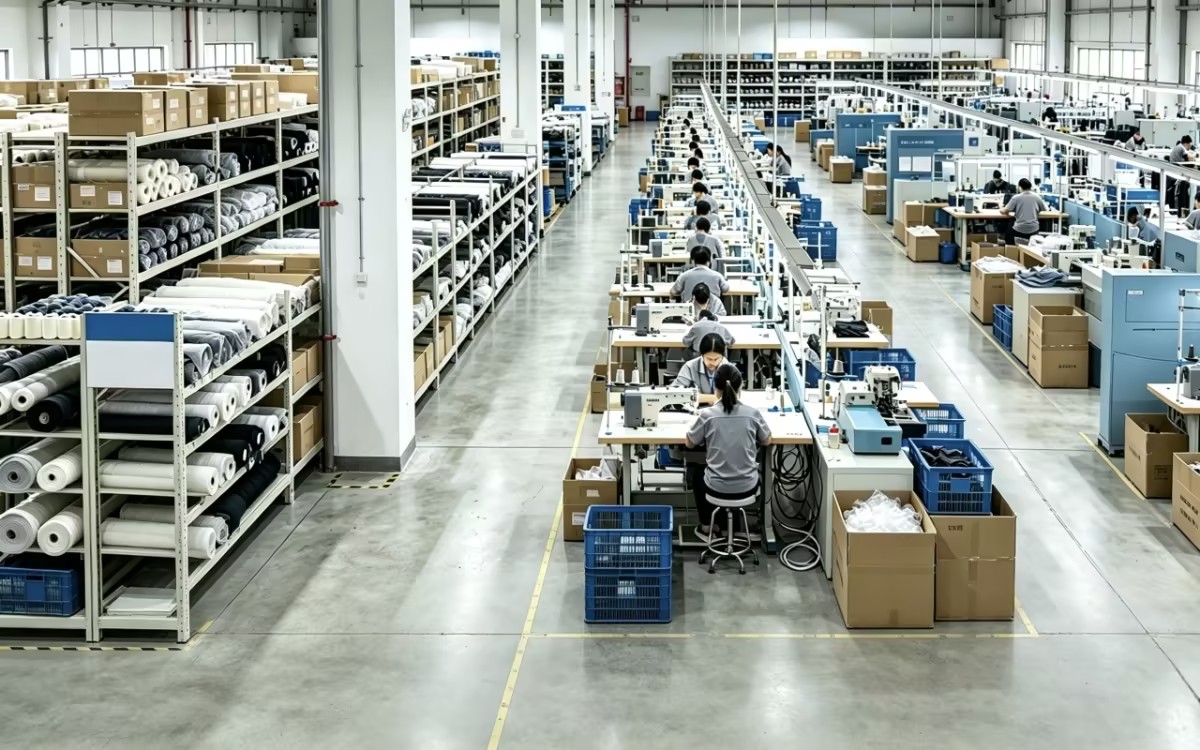
For overseas distributors, brand operators and corporate procurement teams sourcing protective workwear and outdoor uniforms, supplier evaluation never stops at quotation and sample quality. Consistent finished product workmanship, predictable lead times and traceable manufacturing workflows all rely on well-organized, regulated factory floors.
Disordered fabric storage, randomly scattered accessories, misplaced sewing tools and unlabeled semi-finished goods are common pain points in garment workshops. These issues frequently trigger color inconsistency, sizing errors, production delays and various after-sales troubles. During our regular on-site inspections, we repeatedly identified various on-site management hazards. These problems not only cut down production efficiency, but also bring potential fire and electrical safety risks that fail international audit standards.
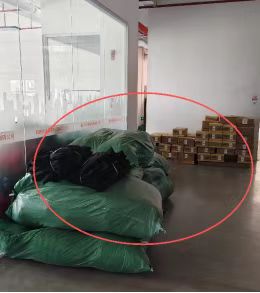
Warehouse fire escape aisle blocked by stacked green fabric rolls, factory 5S inspection record
Piled finished goods completely block fire escape routes, hindering evacuation in case of emergencies. Disorganized stacking also disrupts material circulation in warehouses, mixing fabric batches and leading to mismatched cutting pieces for mass orders.
Leapy implements a standardized full-process 5S management system covering cutting, sewing, quality inspection and packaging zones. We assign responsible staff and clear rectification deadlines for every hidden danger found in inspections to eliminate production risks at the source. All OEM and ODM procedures follow unified 5S standards, enabling us to deliver protective workwear and outdoor garments with stable workmanship and uniform performance to global partners.
Why 5S Management Is Critical for Workwear Manufacturing
Garment production involves hundreds of fabric and accessory types with heavy manual operations. Messy workshop environments directly damage order delivery outcomes. We tailor our exclusive 5S system to apparel manufacturing to solve three core industry pain points.
1.Minimize production errors caused by mixed materials Unlabeled leftover fabrics, scattered trims and random sewing attachments often result in mismatched fabrics, wrong-size accessories and incorrect pattern cutting. With clear zone division under 5S rules, raw materials, accessories and tools are categorized and labeled separately to avoid batch mixing and production mistakes.
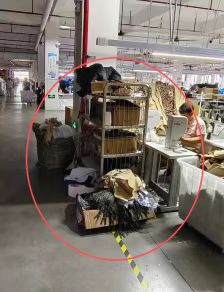
Cluttered sewing workshop aisle filled with scattered semi-finished fabrics and accessories
Stacked idle materials and semi-finished products block workshop passages, forcing workers to take long detours to fetch supplies and wasting valuable working hours. Mixed fabrics and accessories easily cause mismatched garments with inconsistent sizing and patterns.
2.Boost overall workshop productivity by removing wasted movements Without fixed storage positions, workers waste plenty of time searching for scissors, measuring tapes, zippers and buttons during assembly. The 5S system sets dedicated storage spots for all supplies and streamlines material flow from fabric warehouse to cutting tables and assembly lines, cutting unnecessary movement and waiting time.
3.Sustain long-term stable product quality Mixed defective goods, semi-finished products and qualified items, together with dirty equipment, easily lead to uneven stitching, fabric stains and sizing deviations. Disorganized workshops also contain fire and electrical hazards that cause failures during third-party factory audits.
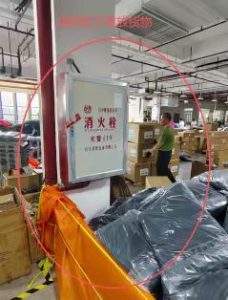
Fire hydrant fully covered by piled finished apparel boxes, factory safety audit photo
Obscured fire-fighting equipment is a major deduction item in international factory audits. Complete 5S regulations mandate reserved safety space around all fire facilities to avoid compliance failures.
The hidden troubles caused by unregulated workshops are fully solved after we comprehensively rolled out the 5S management system. The obvious contrast before and after rectification is shown in the table below:
Before VS After 5S Rectification Contrast Table
|
Item |
Before 5S Rectification (Inspection Hazards) |
After Full 5S Implementation |
|---|---|---|
|
Warehouse & Fire Safety |
Fire aisles blocked by fabric rolls; Fire hydrants covered by finished goods |
Clear reserved fire escape passages; All fire facilities fully accessible at all times |
|
Sewing Workstations |
Scattered tools & semi-finished goods; Open exposed electrical cabinets |
Fixed tool storage boards; Enclosed, neatly arranged electrical equipment |
|
Material Management |
Mixed fabric batches, unlabeled leftover trims, random piled accessories |
Categorized, labeled racks; Independent storage for Sorona sustainable fabrics |
|
Electrical Layout |
Loose power strips randomly placed without fixation |
All sockets & wires fixed at designated safe positions |
|
Production Quality |
High risk of color difference, sizing errors & oil stains on garments |
Stable batch consistency; Minimized rework and defective products |
What Is 5S Management
5S is a standardized on-site management methodology originating from manufacturing workshops, consisting of five core pillars: Sort, Set in Order, Shine, Standardize and Sustain. It focuses on regulating workshop layout, material storage and daily operation habits rather than complex technical upgrades.
For apparel factories, each pillar carries targeted production meanings: Sort clears useless items; Set in Order realizes visualized fixed storage; Shine keeps workstations and equipment clean; Standardize turns temporary tidiness into fixed SOP rules; Sustain encourages all staff to maintain standardized habits long term.
This simple but effective management framework lays the foundation for our standardized OEM workwear production, and we have fully localized it to fit fabric cutting, sewing and inspection workflows.
How Leapy Implements the Full 5S System Across All Production Zones
We do not rely on abstract management theories alone. We integrate the five pillars of Sort, Set in Order, Shine, Standardize and Sustain into every link of our production workflow, including Sorona fabric storage, cutting, sewing, finished inspection and packaging. All hidden risks found in routine inspections are fully rectified under this framework.
Sort: Remove Unnecessary Items to Free Up Workshop Space
Production supervisors conduct daily spot checks to clear expired sample fabrics, discarded pattern drafts, broken sewing machines and obsolete accessories, retaining only materials and tools required for ongoing orders.
Set in Order: Visualized Fixed-Position Storage for Easy Access
Our factory is divided into distinct functional zones with clear signage: Raw Fabric Warehouse, Cutting Workshop, Sewing Assembly Lines, Mid-Production Inspection Zone, Finished Goods Inspection Station and Packaging Area.
Rolled fabrics are placed on labeled racks sorted by material type, color and batch number. Sewing tools such as rulers, seam rippers and industrial scissors are fixed on wall-mounted tool boards. Zippers, reflective tapes, snap buttons and other accessories are stored in coded compartment boxes. All customer samples are filed by order number and brand for quick reference during mass production.
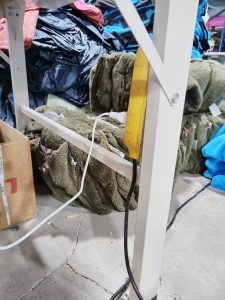
Neat partitioned Sorona fabric storage racks with unobstructed fire aisles after 5S rectification
After full rectification, fabrics are neatly layered on racks with fixed wire arrangement. No loose lint or debris covers the floor, and fire aisles remain fully unobstructed. This completely solves previous issues of blocked passages and messy wiring.
A one-way streamlined material flow runs from fabric warehousing to finished garment packaging without cross-traffic. Our signature Sorona half-zip outdoor tees are produced on dedicated sewing lines with independent material delivery to avoid mixing with PPE workwear orders.
Shine: Regular Station Cleaning to Detect Equipment Hazards Early
All workers clean their workstations before shift handover. Sewing machines are wiped down and fabric lint cleared every hour to keep the floor free of loose threads.
Before rectification, workstations were piled with random materials while electrical cabinets remained open without protection. Fabric lint accumulated around electrical components created fire and short-circuit risks. Cluttered tabletops also stained light-colored fabrics and raised rework rates.
Regular equipment cleaning prevents thread buildup that causes uneven stitching and fabric scratches. Daily deep cleaning of storage racks and floors avoids dust stains on light-toned Sorona moisture-wicking fabrics, cutting rework and defective rates significantly.
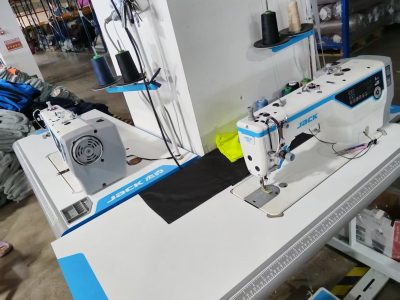
Clean Jack sewing workstation with organized thread spools and clutter-free tabletop
With mandatory hourly and shift-end cleaning rules, workstation tabletops stay free of clutter. Thread spools are hung uniformly, and no loose lint collects on floors or machines, eliminating fabric stains and sewing defects at the source.
Standardize: Lock Uniform Rules & Align with ISO 9001 Quality System
Sort, Set in Order and Shine practices are formalized into unified written standards with complete workshop SOP documents, defining cleaning cycles, material placement rules and daily inspection checklists.
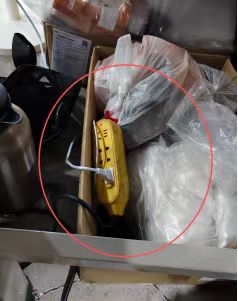
Loose unsecured power strip randomly placed inside carton without fixed mounting
Previously, power strips were casually tossed into cartons without secure mounting. Loose wiring risks overheating and short circuits under high workshop temperatures, creating severe electrical hazards. Our standardized 5S rules require all electrical wires and sockets to be fixed in designated positions to eliminate random wiring.
Workshop supervisors carry inspection sheets twice daily to audit 5S compliance and fix irregularities immediately. Fabric handling, cutting and QC processes follow dual standards of ISO 9001 and 5S, unifying operating procedures across all assembly lines and minimizing quality fluctuations caused by inconsistent manual operations.
Fully standardized tidy sewing workstation with fixed tool storage under factory 5S rules
After standardized tool storage and workstation management, no personal belongings or idle fabrics occupy machine tables. All tools are categorized for quick access, creating smooth, efficient operating workflows for every sewer.
Sustain: Cultivate Long-Term Clean Working Habits
We organize monthly 5S training sessions for all production staff, explaining how tidy workshops reduce rework and shorten order lead times. Each production line assigns a dedicated zone manager responsible for daily 5S maintenance. Weekly cross-workshop evaluations and reward mechanisms recognize model tidy production lines. Continuous training and routine inspections ensure stable long-term 5S implementation without gradual regression into messy conditions.
How 5S Factory Management Supports ISO-Certified Manufacturing
The 5S on-site management system does not operate independently. It serves as the on-site execution foundation of our ISO 9001 quality management framework, forming a closed-loop quality control chain:
- ISO 9001 sets universal quality standards for apparel OEM manufacturing
ISO specifications translate into actionable on-site rules via 5S sorting, positioning and cleaning protocols
Consistent 5S implementation creates orderly, controllable production environments
- Regulated workshop conditions deliver uniform, low-defect protective workwear and outdoor apparel for every customer order
For clients arranging factory audits or third-party quality inspections, we preserve complete daily 5S inspection records and before-and-after rectification photos to support fully traceable manufacturing that meets international certification requirements.
Tangible Benefits of Our 5S System for Global Buyers
Instead of only listing internal operational improvements, we focus on direct advantages delivered to every brand and enterprise partner placing OEM workwear orders with us, illustrated by two authentic overseas cooperation cases.
1. Highly consistent finished quality with minimized batch color and sizing deviations
Clear batch separation, independent fabric storage and regular equipment dust removal greatly reduce fabric stains, sewing flaws and sizing errors. All batches of workwear and outdoor jackets maintain unified appearance, material performance and workmanship, with no obvious quality gaps between separate shipments of the same design.
Client Case 1: Australian Outdoor Brand Custom Sorona Half-Zip Long-Sleeve Tees
This brand previously partnered with a small manufacturer lacking standardized on-site management. Permanently blocked warehouse aisles and mixed fabric batches led to cross-color contamination, unstable garment lengths and oil stains across two bulk shipments. Large quantities of finished goods failed retail standards and delayed store launches.
After switching cooperation to Leapy, our 5S fabric zoning storage, dedicated tee assembly lines and segmented quality control eliminated cross-batch color difference for its full batch of Sorona half-zip tees. Sizing errors were controlled within a narrow industry tolerance range, with no oil-stained defects detected during full inspection. The goods passed third-party inspection at one time, and the brand has maintained stable repeat orders for retail restocking ever since.
2. Full production transparency for factory visits and order tracking
Clearly labeled production zones and categorized sample archives allow buyers to observe all manufacturing links directly during factory tours. Our sales and production teams can quickly locate your fabric batches, semi-finished goods and sample archives to share real-time manufacturing progress anytime.
3. Stable, predictable lead times with drastically reduced delivery delay risks
Optimized material circulation and fewer production mistakes eliminate massive rework that causes production shutdowns and shipment postponements. Our 5S standardized workshops sustain steady daily output, allowing us to strictly follow agreed lead times for bulk OEM orders and prevent disruptions to your retail schedules or corporate procurement plans.
Client Case 2: European Engineering Enterprise Bulk PPE Construction Workwear
This engineering firm once faced severe delivery delays from a previous supplier with disorganized workshop management. Mismatched accessories and excessive defective goods held up shipments, leaving construction teams without required protective uniforms and halting on-site operations.
After partnering with Leapy, our 5S-controlled separated accessory storage and semi-finished product inspection screens out defects early. Its full batch of reflective safety workwear was shipped on schedule with no mass defects. The enterprise has since entrusted all uniform orders for its global branch offices to our factory.
4. Smoother long-term OEM & ODM cooperation for diverse customization demands
A well-regulated standardized workshop is direct proof of mature large-scale production capacity. Whether you need small-batch prototype sampling or mass protective workwear manufacturing, our 5S-managed facility can stably fulfill orders, laying a solid foundation for repeat purchases, seasonal restocks and joint new product development.
Conclusion
For global buyers searching for a reliable OEM manufacturer of protective workwear and outdoor apparel, orderly on-site factory management acts as an invisible guarantee of dependable order delivery. Leapy’s fully implemented 5S factory management standardizes every step from fabric warehousing to finished garment packaging, coordinating closely with our ISO 9001 quality system to control all production risks at the source.
Our regular inspection and rectification mechanism continuously optimizes warehouse, sewing and back-office areas, eliminating fire and electrical safety hazards while improving garment quality and delivery efficiency.
If you require bulk custom workwear, plan an on-site factory audit, or wish to develop exclusive uniform lines crafted from sustainable Sorona fabrics, reach out to our international sales team to learn more about our standardized workshop management and full-spectrum manufacturing capabilities.
Frequently Asked Questions (FAQ)
1.What core risks does Leapy’s 5S management eliminate for apparel OEM orders?
Our full 5S system solves three major hidden troubles. First, it prevents fabric mixing, accessory mismatching and sizing defects caused by messy storage. Second, it removes fire escape blockages, covered fire equipment and unprotected electrical circuits to pass international factory safety audits smoothly. Third, standardized workflows cut redundant searching and rework, ensuring consistent product quality and on-time delivery for bulk workwear orders.
2.Can the 5S workshop system support customized Sorona fabric workwear production?
Absolutely. We set up independent storage zones for Sorona plant-based fabrics and dedicated sewing assembly lines for Sorona half-zip tees and outdoor uniforms under 5S standards. All bio-based materials are separated from conventional fabrics to avoid cross-contamination, maintaining the fabric’s unique softness, UV shielding and quick-dry performance during mass production.
3.Will 5S management add extra costs or longer lead times to my OEM orders?
On the contrary, 5S reduces overall production costs and stabilizes lead times. Clear material zoning minimizes defective products and rework, while optimized workshop layout speeds up material circulation. These improvements help us avoid shipment delays and control extra loss costs, without raising the quotation for our clients.
4.Do you provide factory inspection records and before/after 5S rectification photos for third-party audits?
Yes. We keep complete daily 5S inspection logs, hazard records and all before-and-after comparison photos including the warehouse, sewing lines and electrical safety areas. All documents and images can be provided for your third-party audit or buyer factory visit upon request.
5.How does 5S cooperate with your ISO 9001 quality control system?
ISO 9001 defines global quality standards for garment manufacturing, while 5S turns these abstract standards into daily on-site operation rules covering sorting, cleaning and standardized storage. The two systems work together to build a closed-loop quality control chain and keep batch quality consistent for all protective workwear and outdoor apparel orders.